-
-
-
-
-
Wellington Region Economic development June 2021
This report brings together, rationalises and prioritises relevant and available information relating to Regional Economic Development (RED) in the Wellington Region at this time. It is designed to provide Wellington…
alarm Published 01 Jun 2021 -
An analysis of the impact of COVID-19 restrictions on air quality in the Wellington region
COVID-19 alert level restrictions curtailed people’s usual activities and transport patterns from March to August 2020. This study showed that a key traffic-related air pollutant (nitrogen dioxide) was dramatically reduced…
alarm Published 01 Jun 2021 -
Greater Wellington's approach to the proactive release of information June 2021
This document outlines how Greater Wellington promotes good governance and encourages transparency in decision-making through increasing the availability of its information to the community. This includes making available responses to…
alarm Published 01 Jun 2021 -
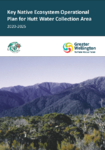
Key Native Ecosystem Operational Plan for Hutt Water Collection Area 2020-2025
The purpose of the five-year Key Native Ecosystem (KNE) Operational Plan for Hutt
Water Collection Area KNE site is to:
• Identify the parties involved
• Summarise the…
alarm Published 01 Jun 2021 -
Key Native Ecosystem Operational Plan for the East Harbour Northern Forest 2021-2026
The purpose of the five-year Key Native Ecosystem (KNE) Operational Plan for East
Harbour Northern Forest KNE site is to:
• Identify the parties involved
• Summarise the…
alarm Published 01 Jun 2021